KEYS HABITATION BLOCK
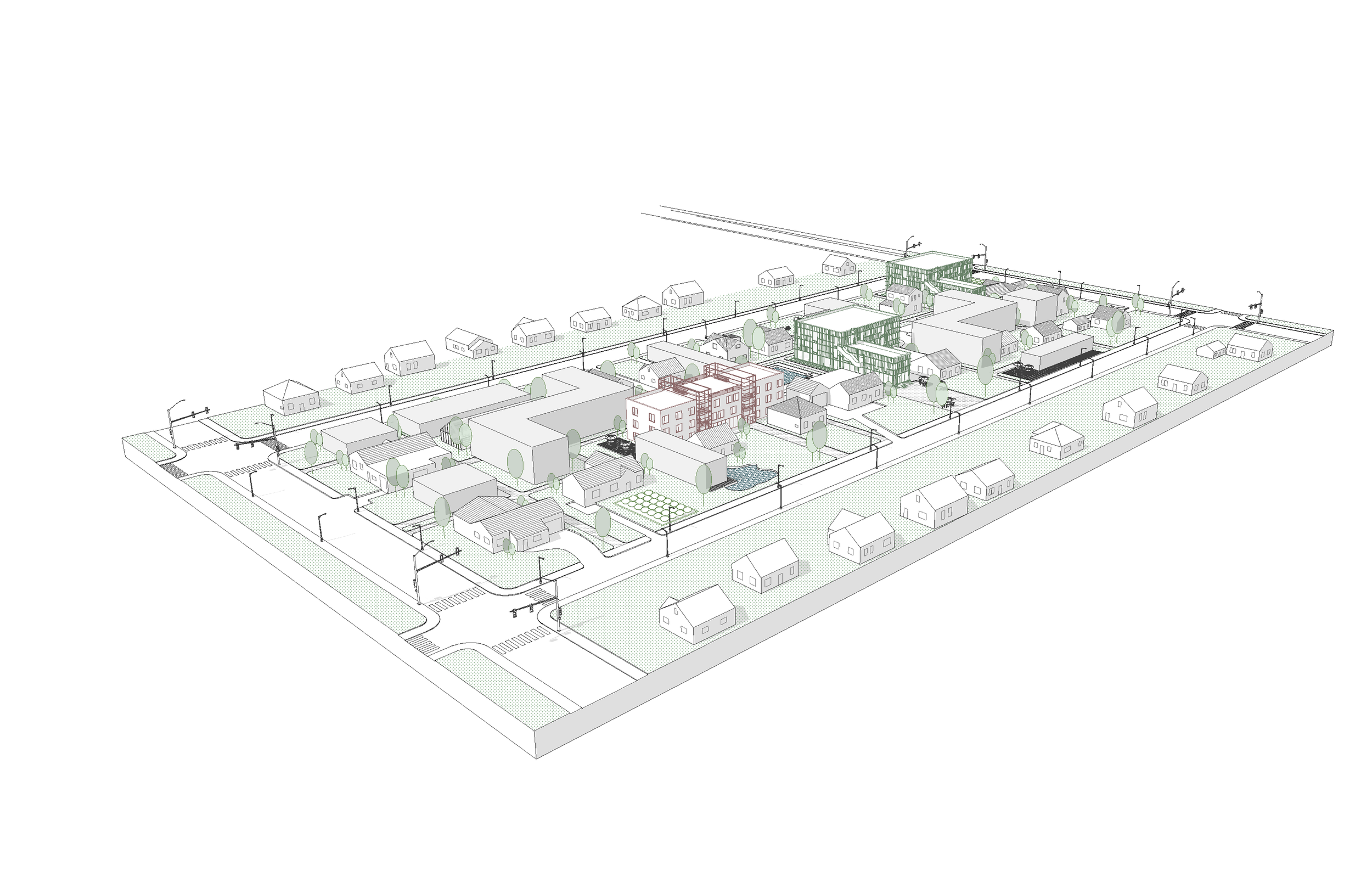
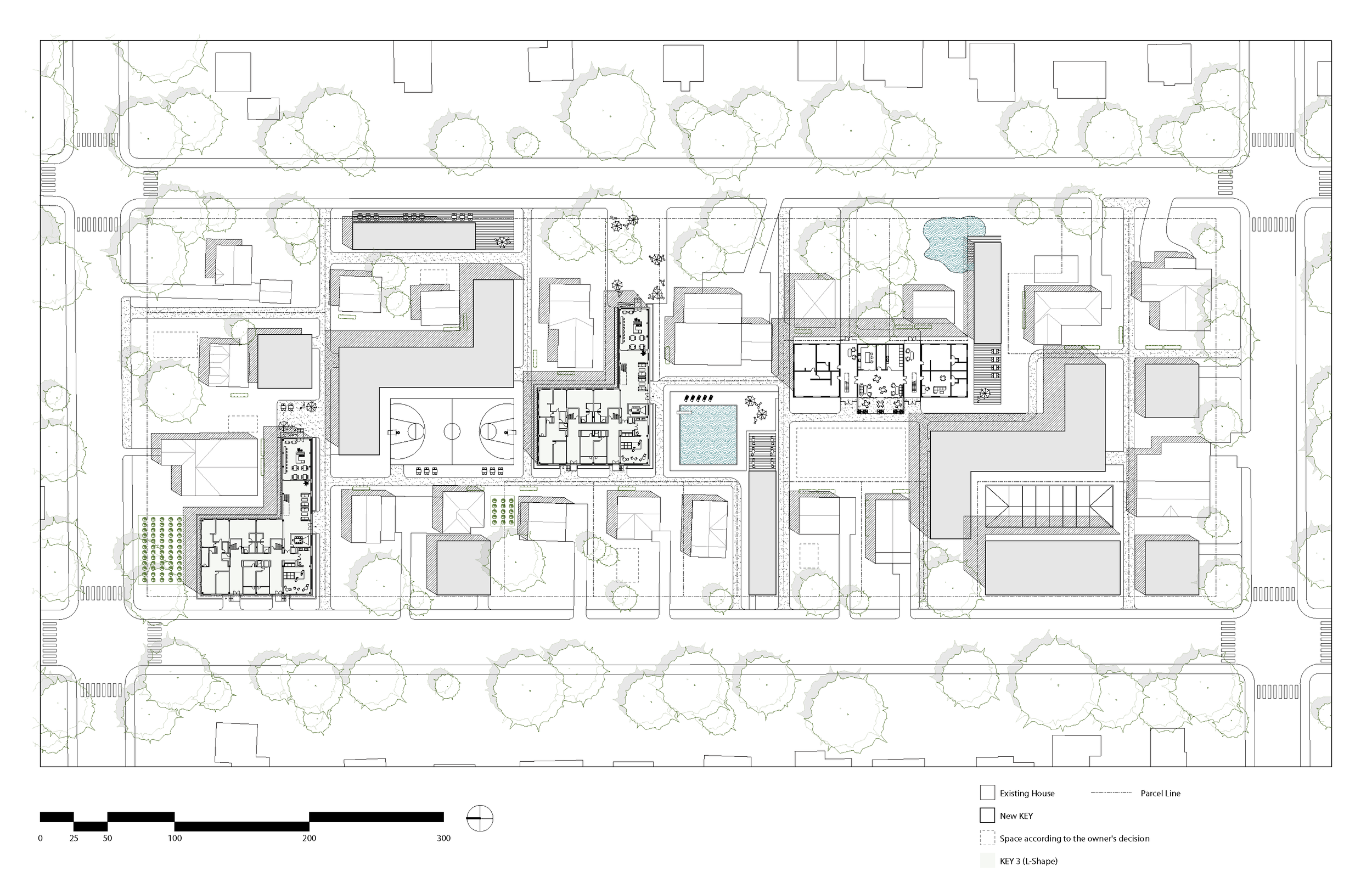
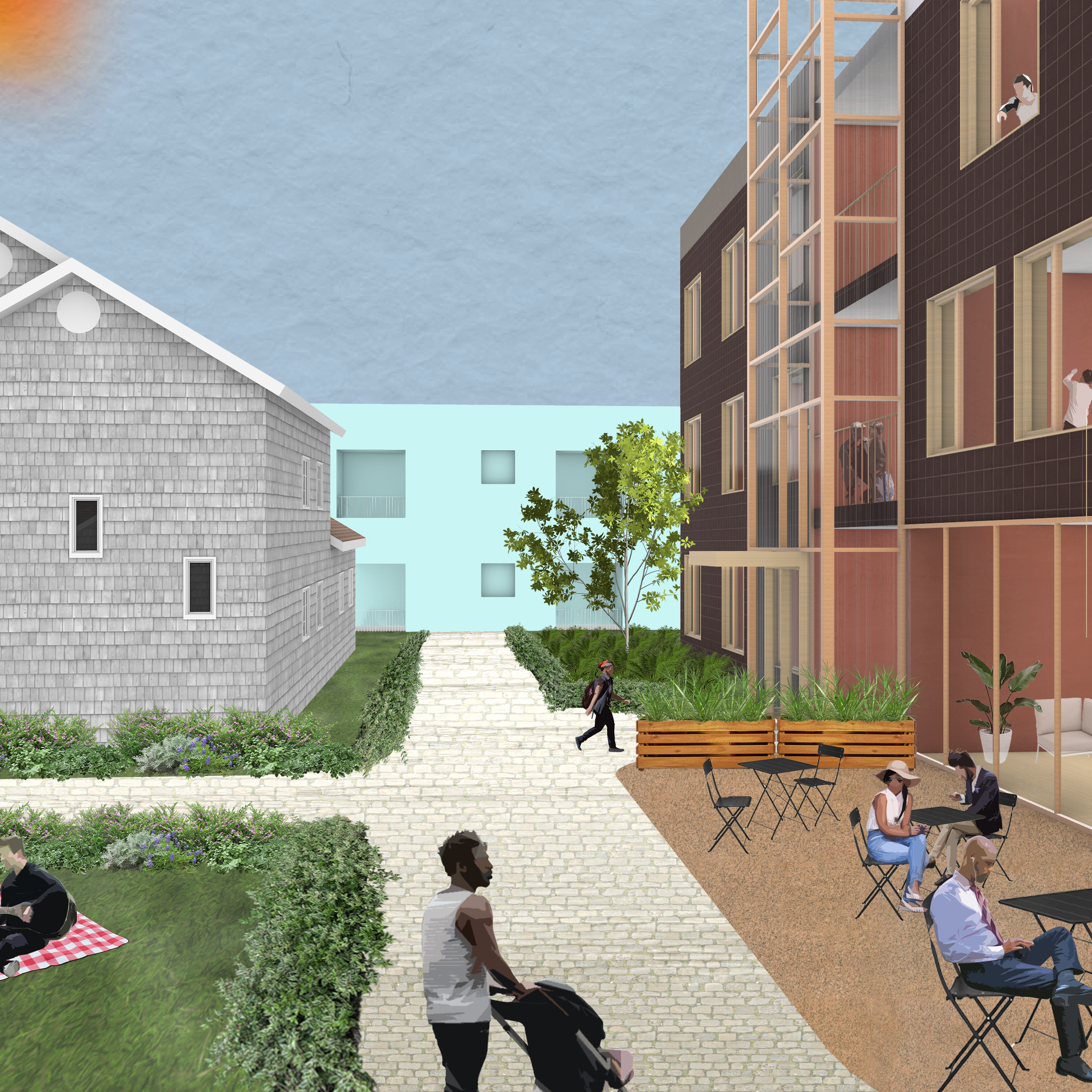
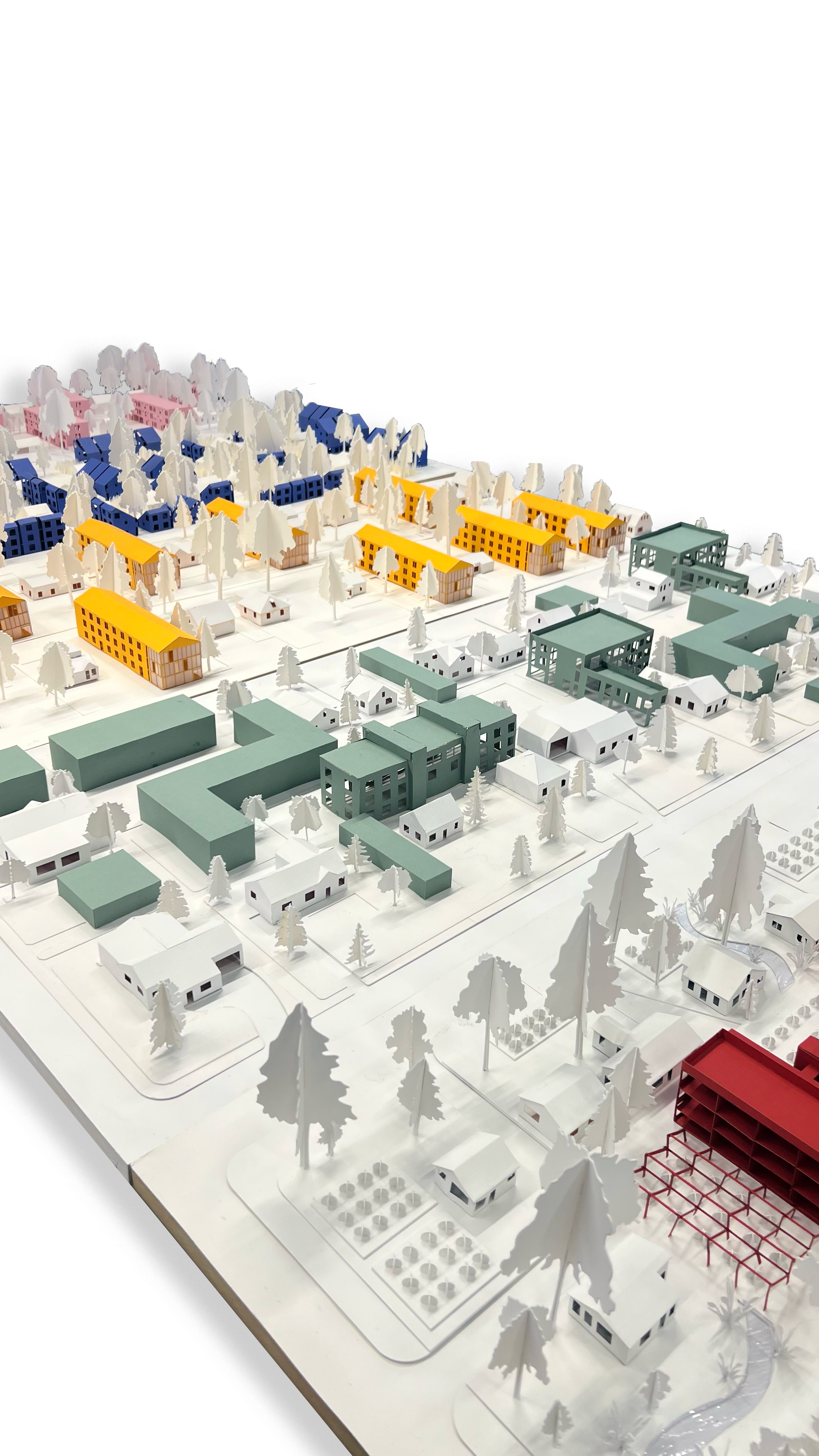
This project proposes a flexible densification strategy tailored for Ann Arbor and adaptable to similar low-density suburban areas. Focusing on an 800-by-280-foot residential block with 21 individually owned parcels, we identified fragmented ownership as a barrier to large-scale development. To address this, we developed six scenarios illustrating how different ownership conditions affect implementation.
In response, we designed five adaptable building "keys"; modular forms that can be inserted, stacked, or interlocked based on site conditions and ownership agreements.
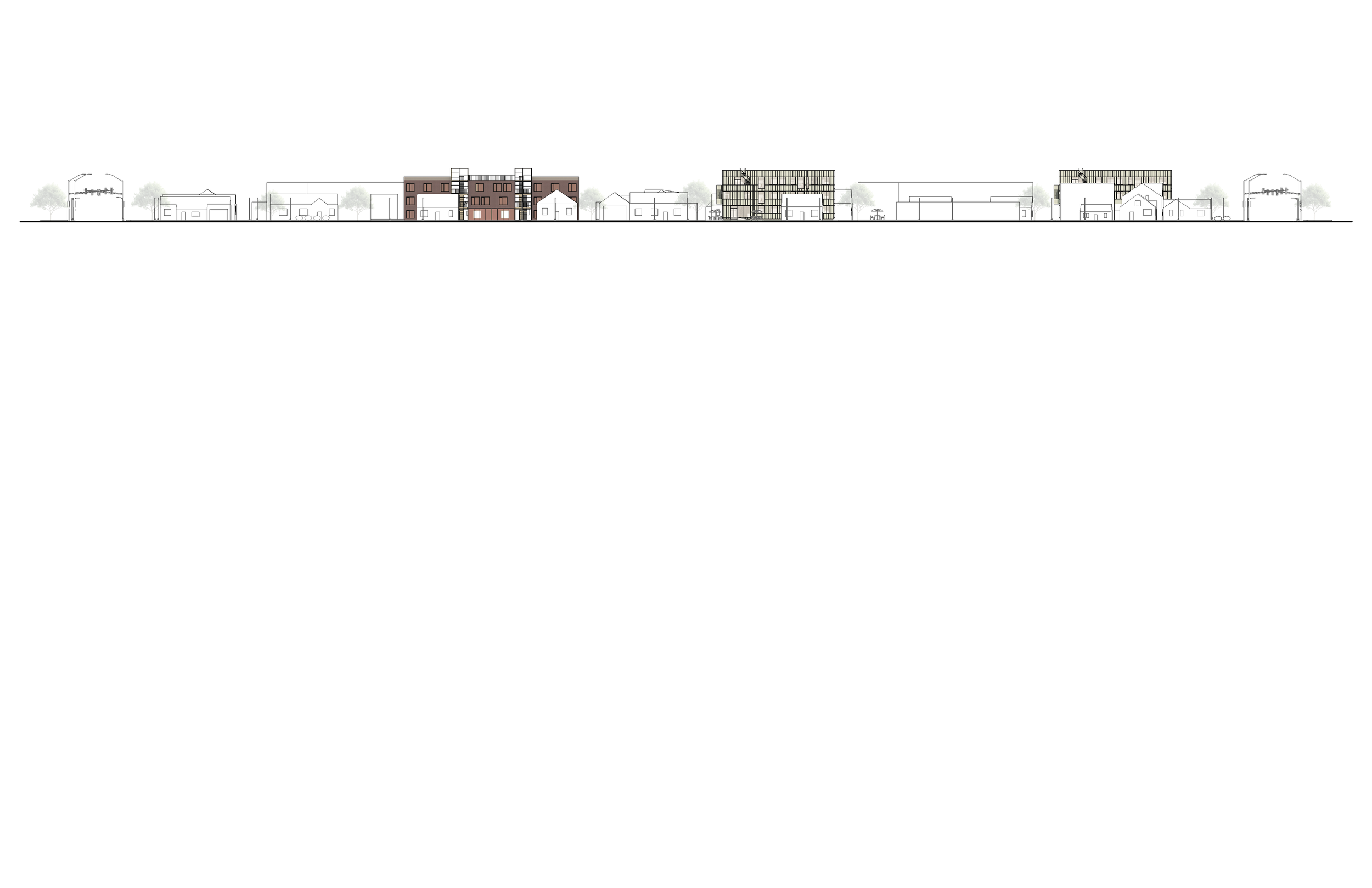
Like Tetris blocks, these keys allow for flexible arrangements in height and form, ensuring compatibility with existing neighborhoods and varying density needs.
A sixth key introduces shared community spaces, parks, pools, and other amenities, to foster social interaction and enhance neighborhood cohesion. Together, these elements support sensitive, livable densification.
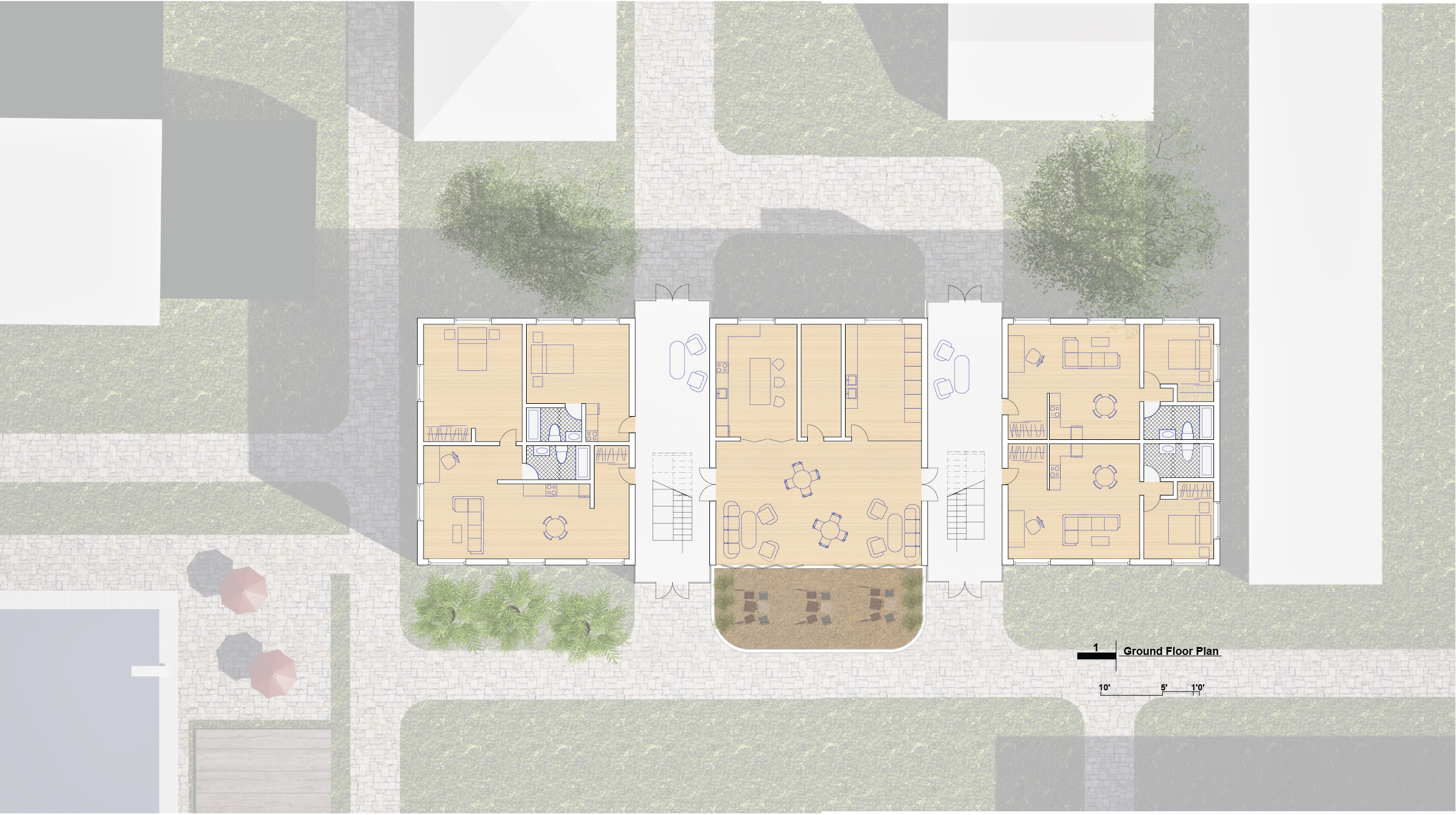
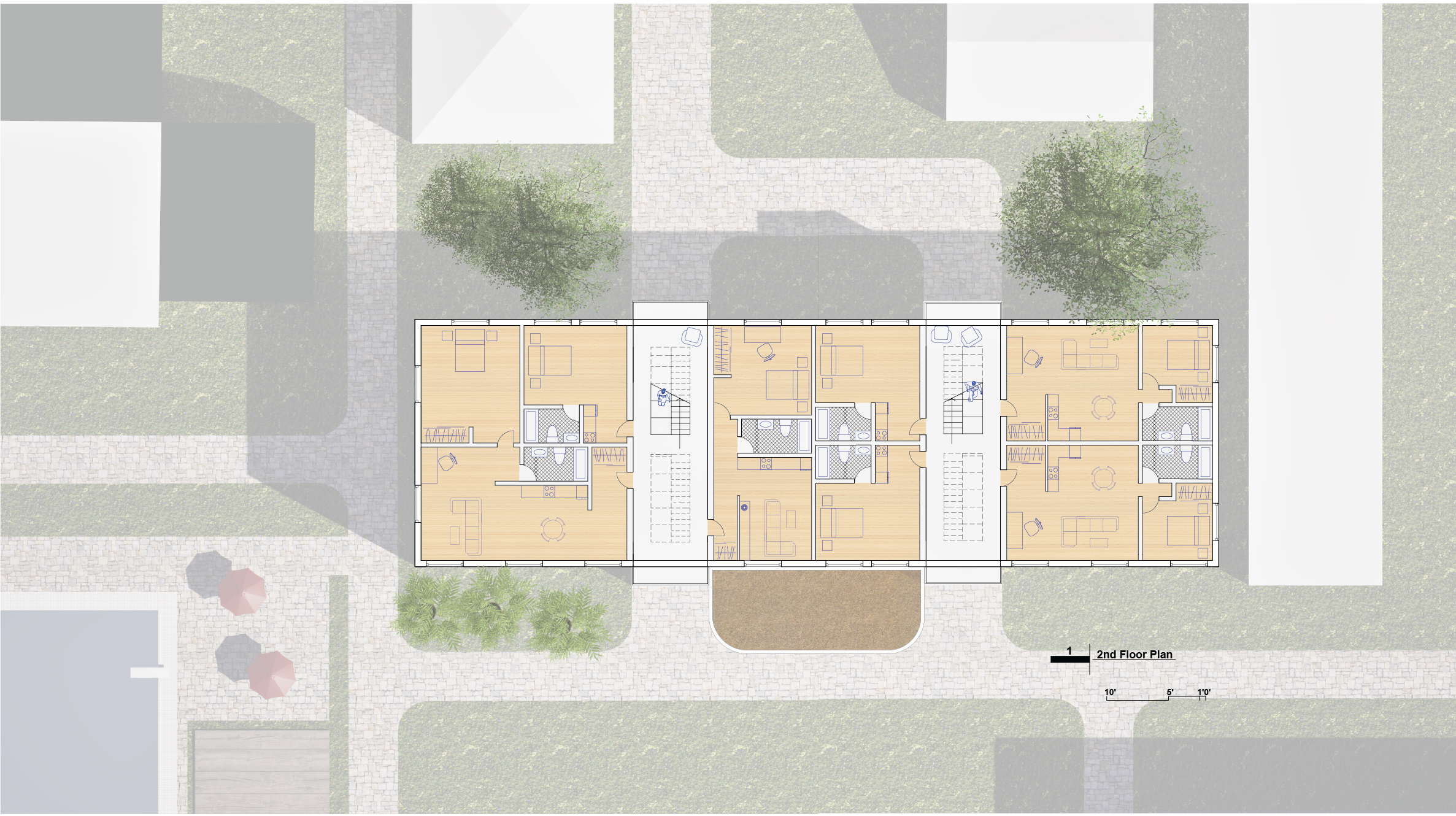
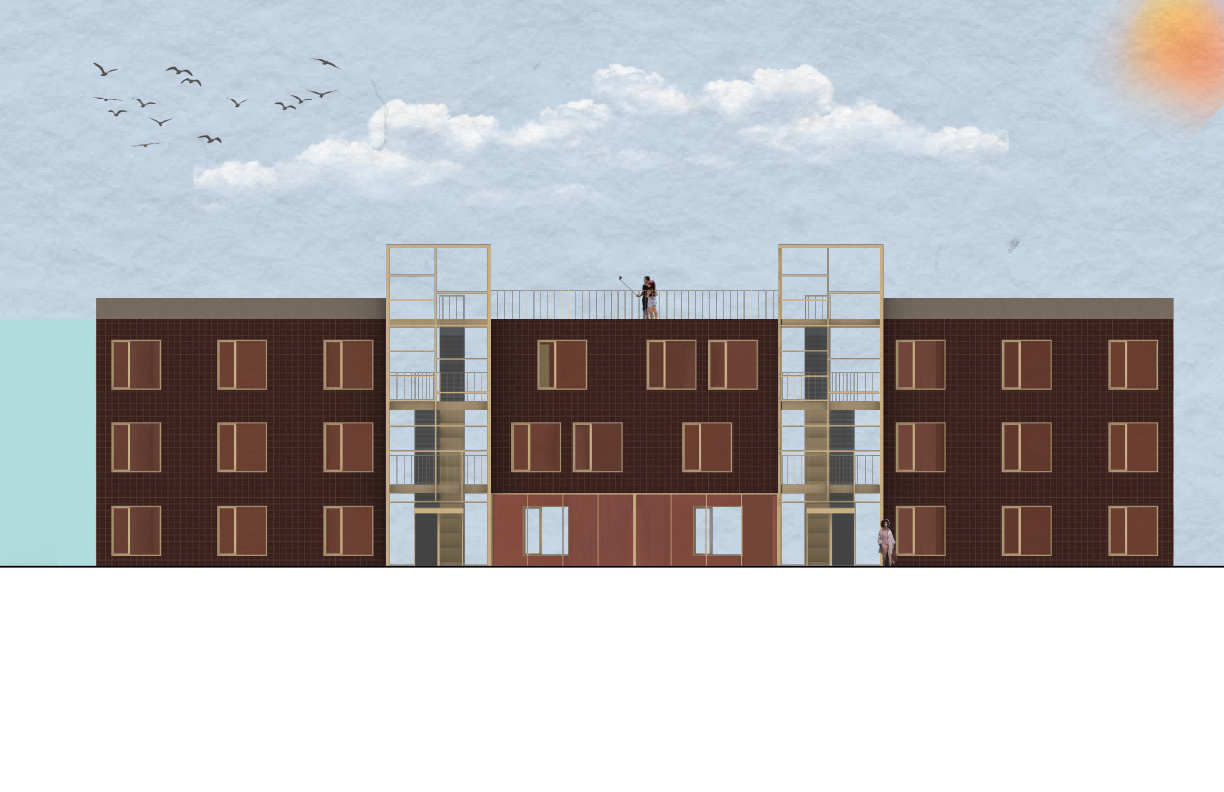
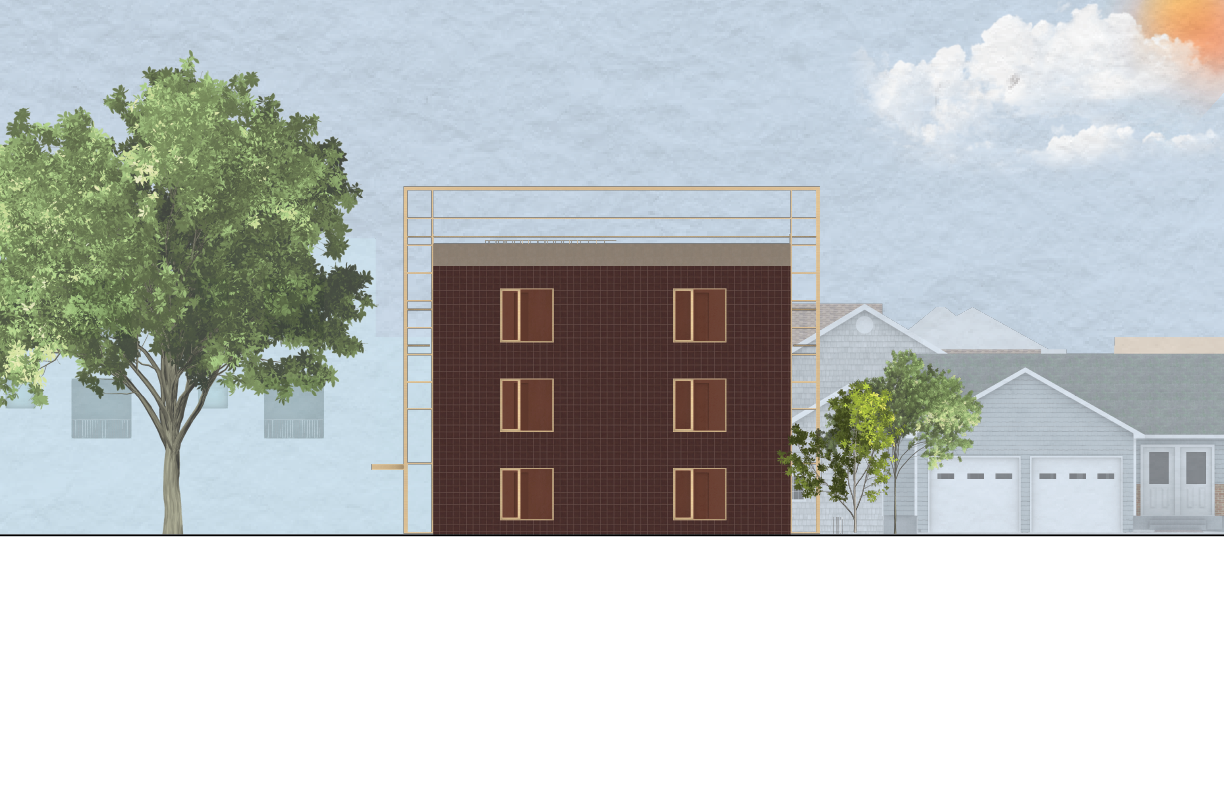
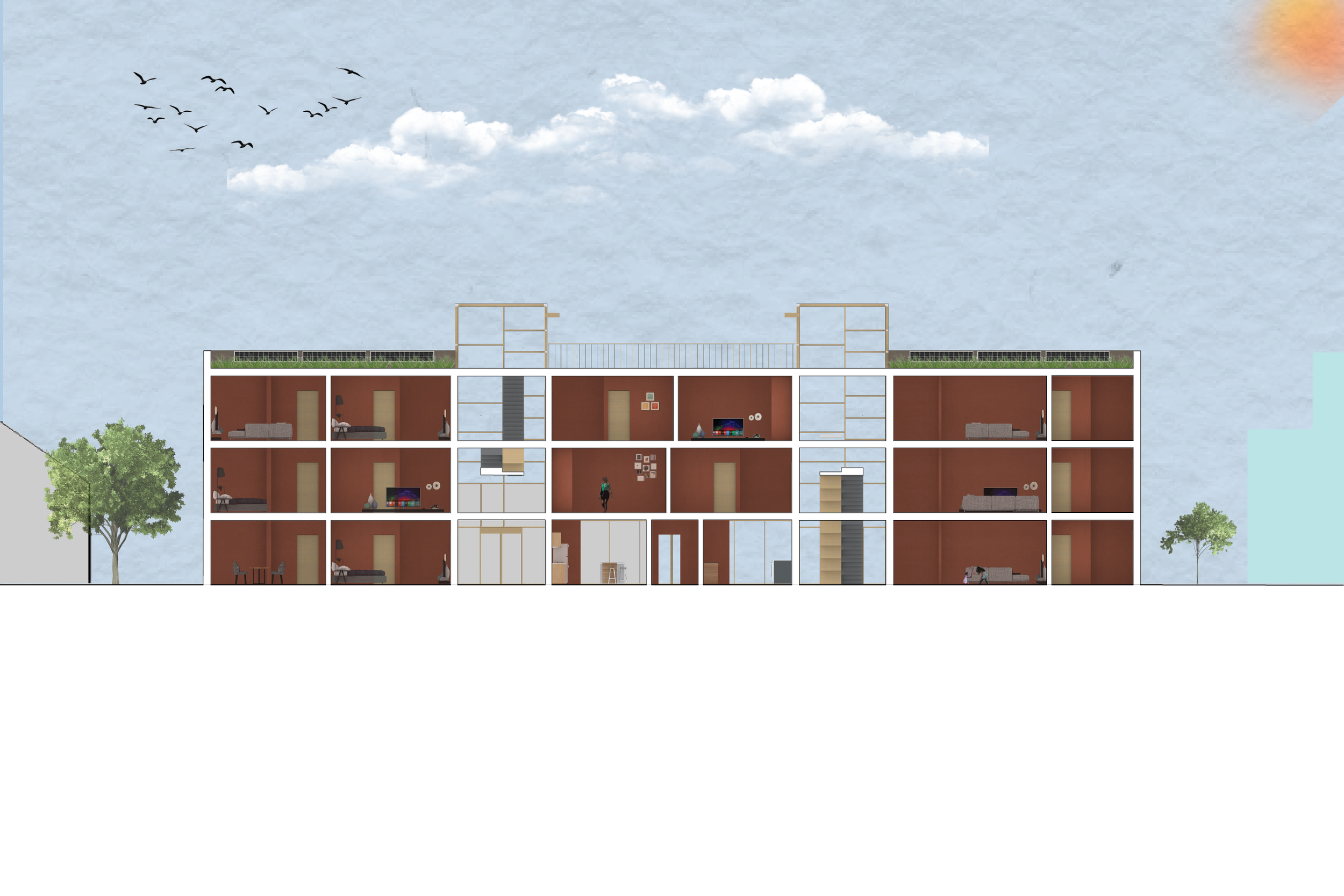
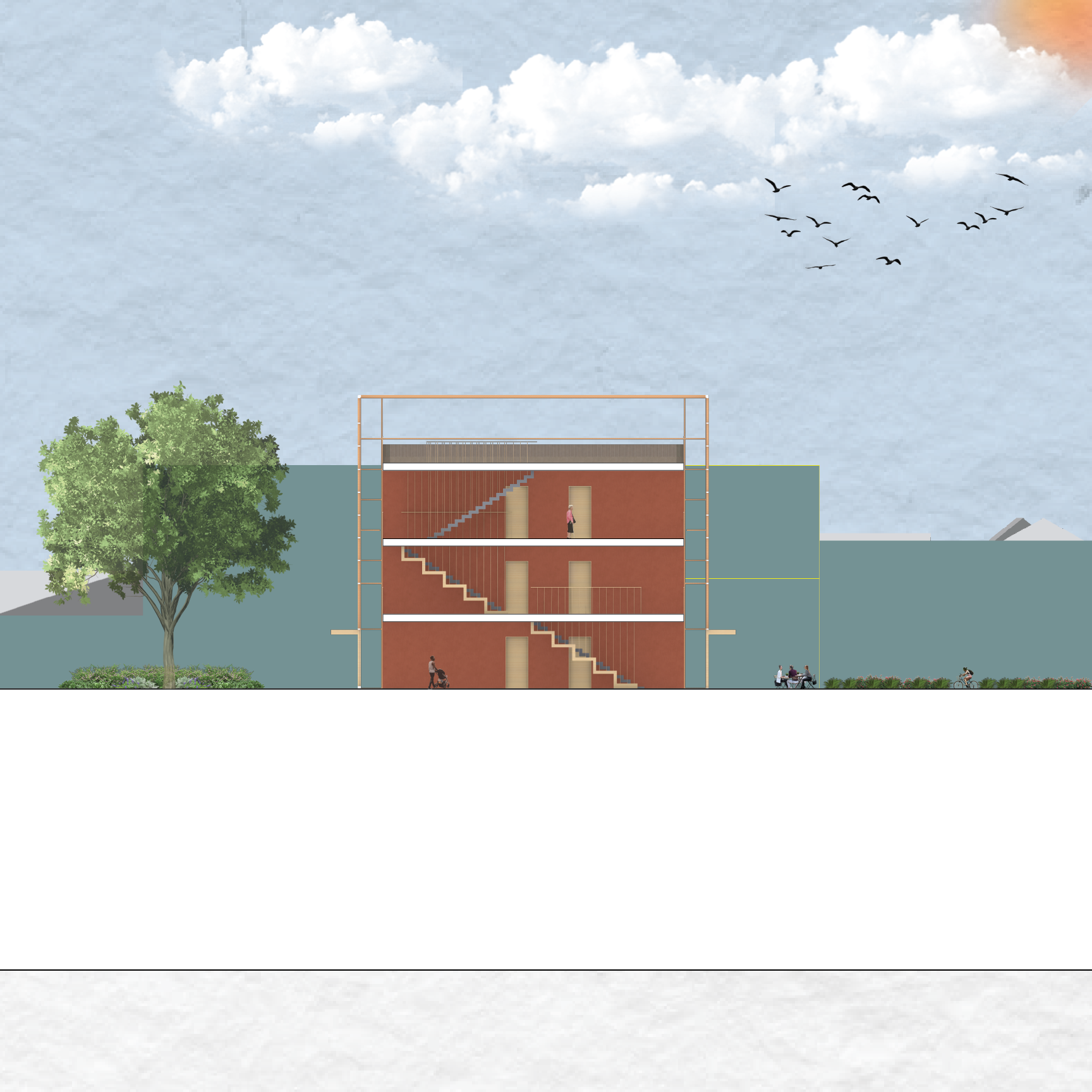
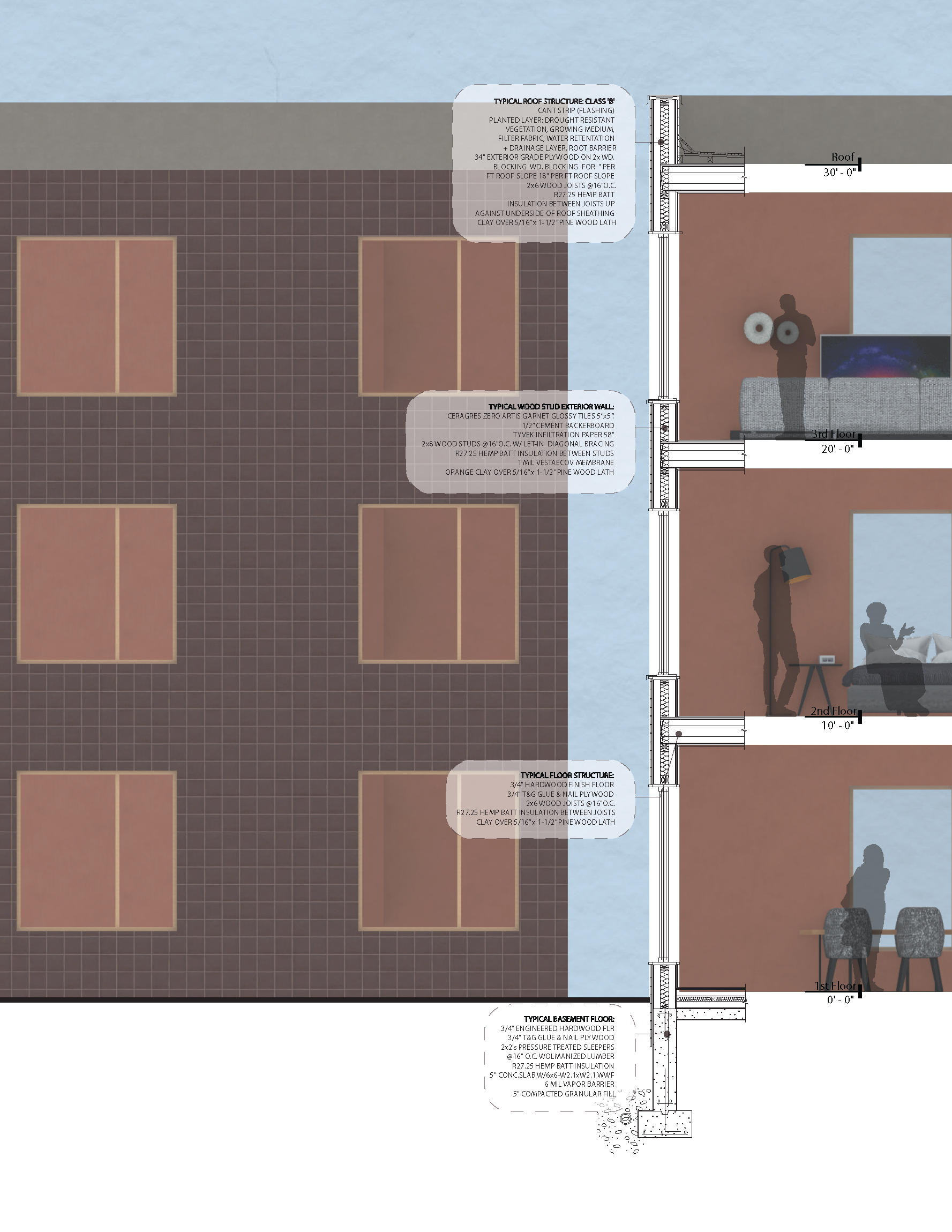
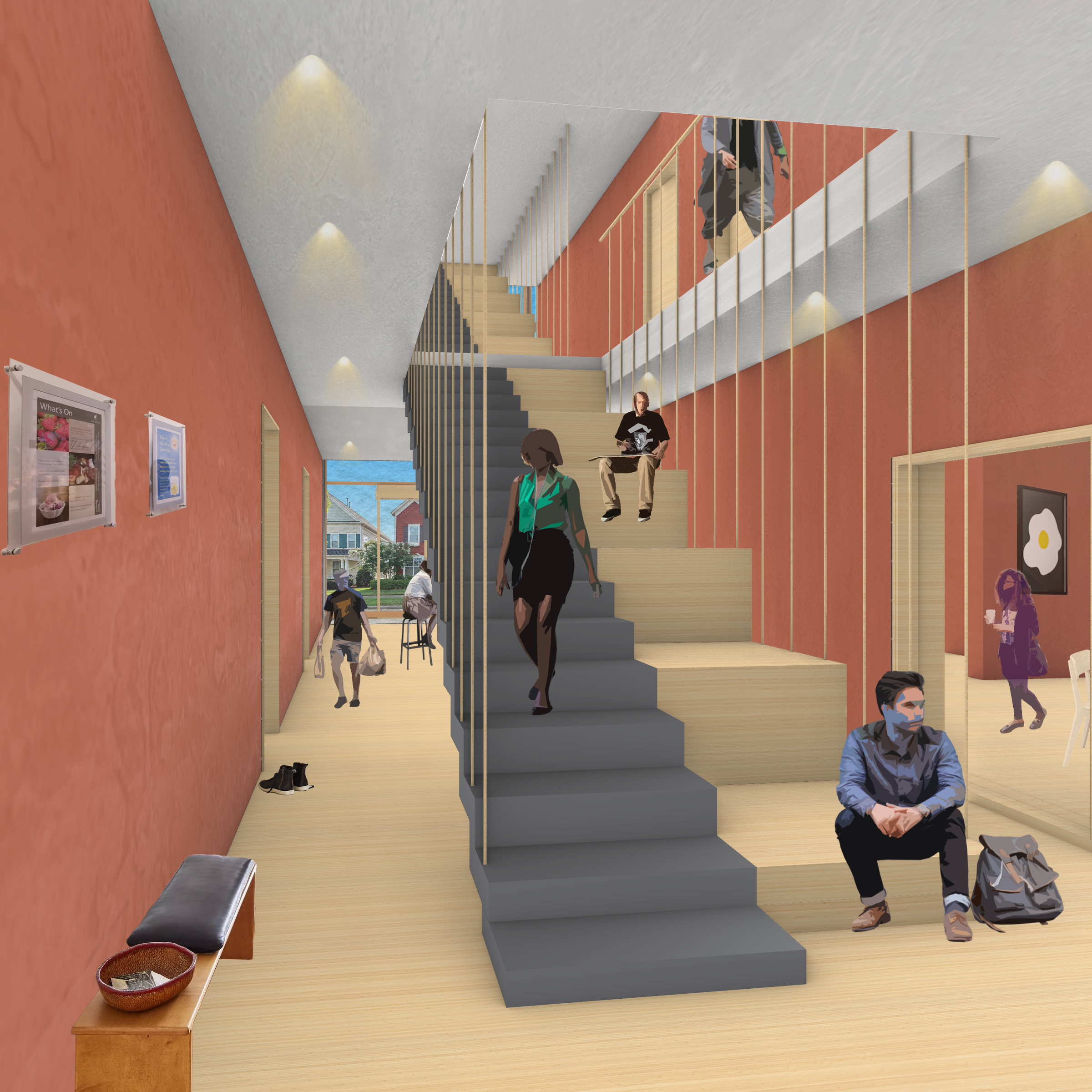
While the block's overall planning was a group effort, I designed Key 3, my reinterpretation of the American walk-up apartment.
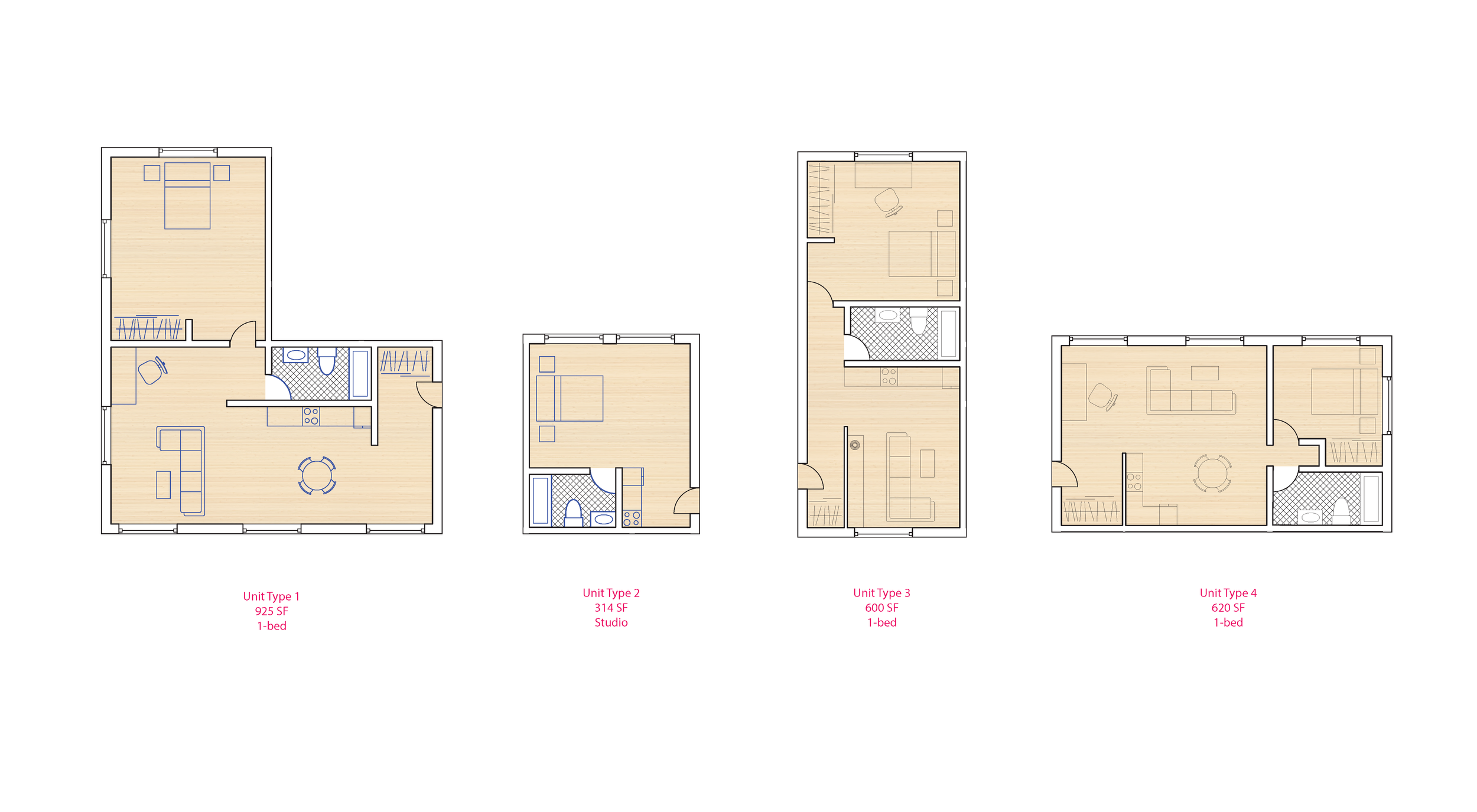
Two staircases are sandwiched between living units and serve as the sole mode of vertical circulation. Unlike standard walk-ups, where stairs are purely functional, I reimagine them as spaces of collectivity. The staircases are widened to double as informal seating zones, encouraging residents to linger, mingle, and encounter one another. Key 3 fits within large backyard spaces or new infill sites. Its rectangular footprint supports 16 units, which can be combined or subdivided based on tenant needs.
Project team: Philippe Kame, Sayyoung Chang.
Program: multi-family residential
Size: 5200 m2
Year: 2025
Location: Ann Arbor, MI, USA