PACKARD_A
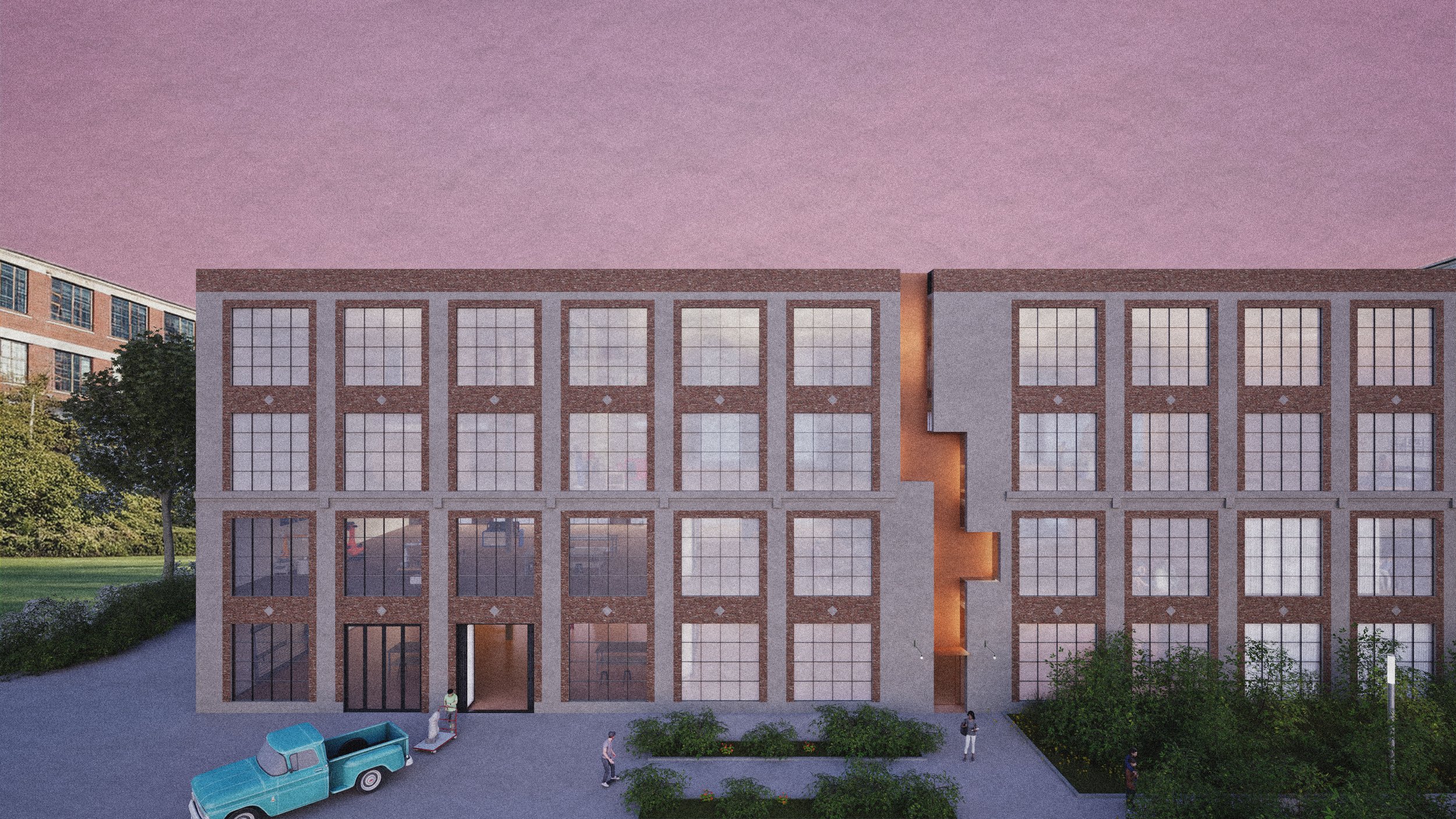
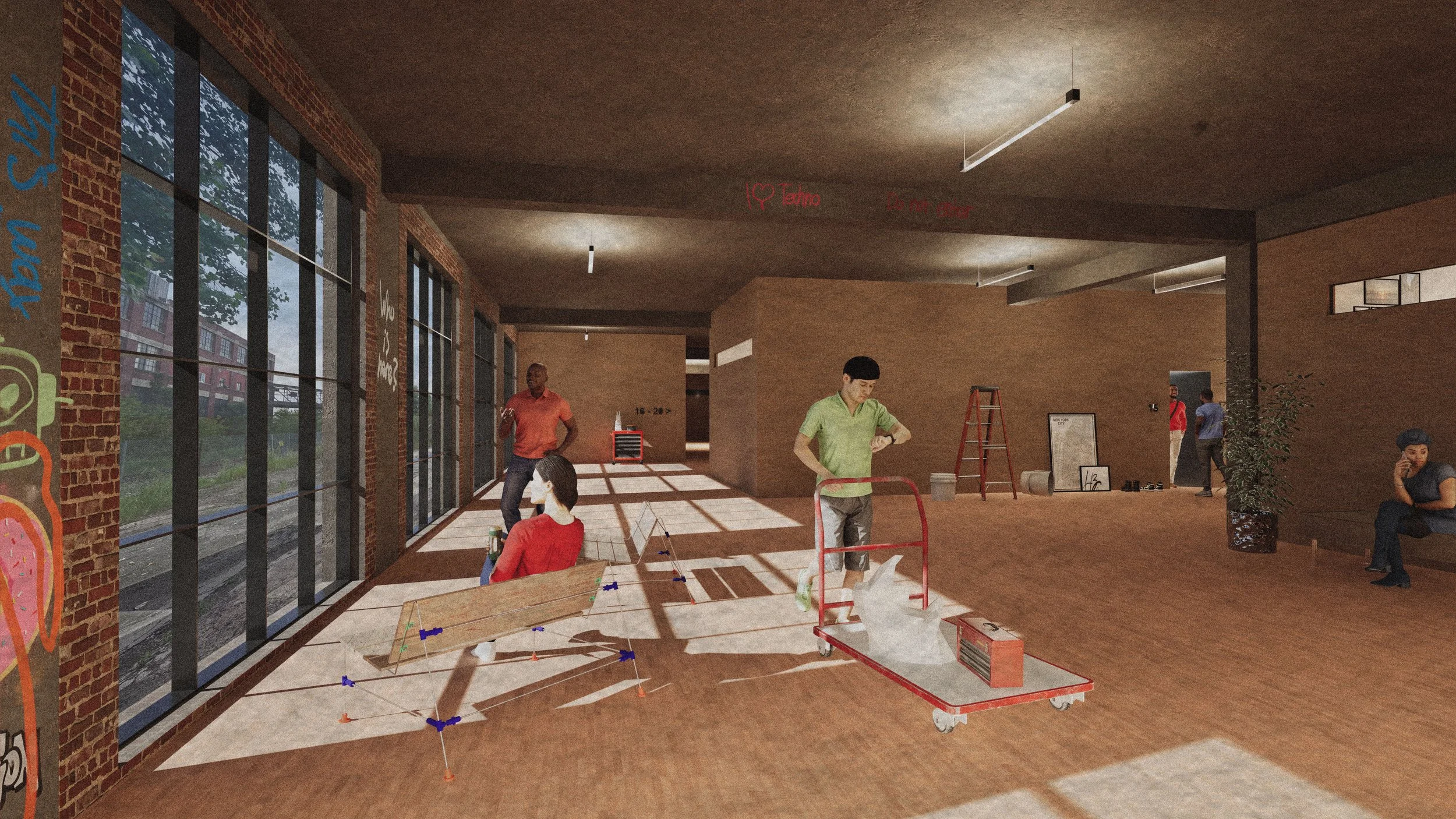
Built in 1903 for Ford Motor Company and designed by Albert Kahn, Packard_A has lived many lives within Detroit’s industrial landscape. Originally constructed as an automobile manufacturing facility, the building later supported a range of industrial uses before falling into disuse. For decades, it stood vacant, becoming an unofficial stage for Detroit’s nightlife and techno scene, hosting clandestine gatherings that reactivated the structure through sound, movement, and collective energy.
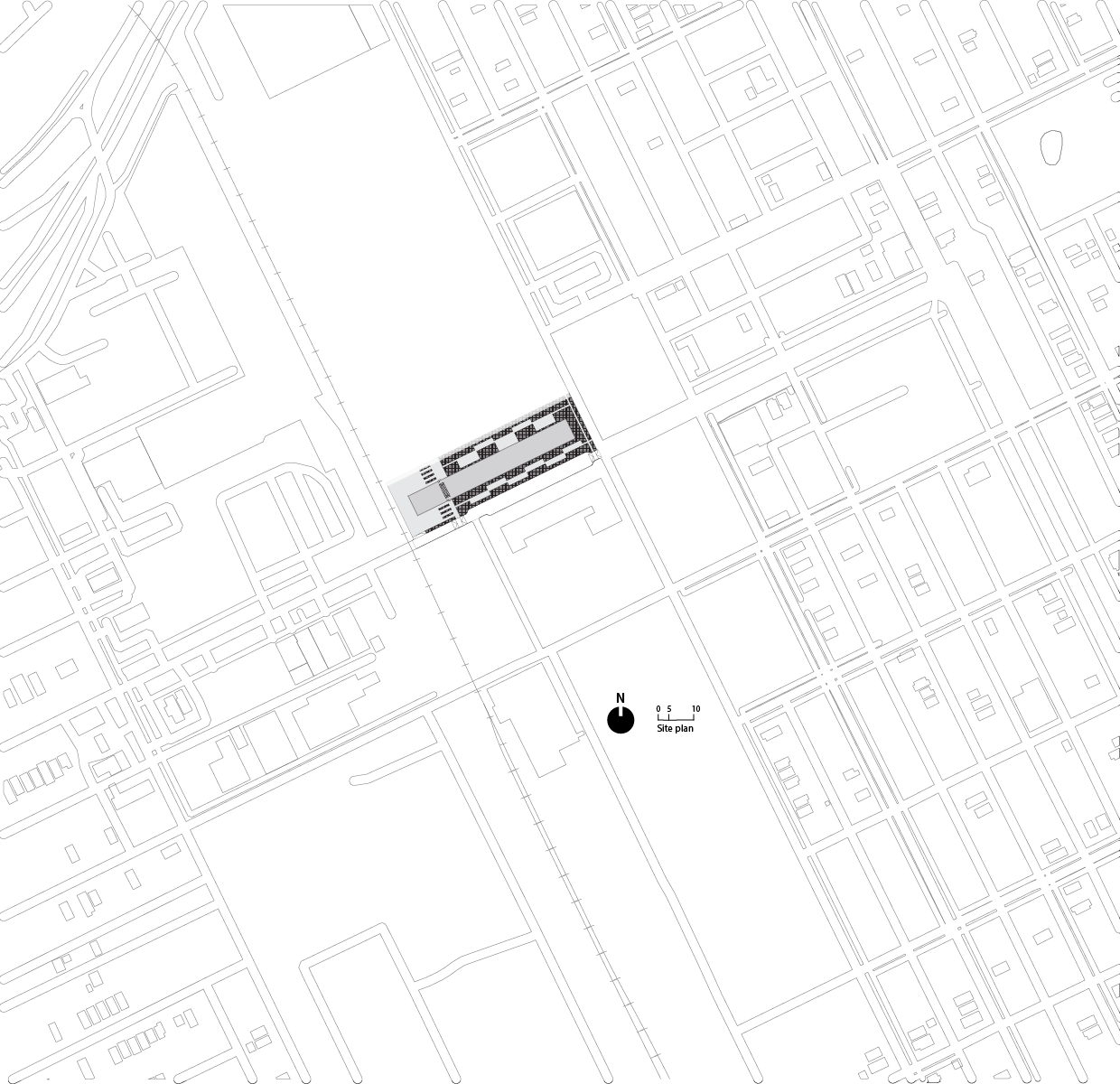
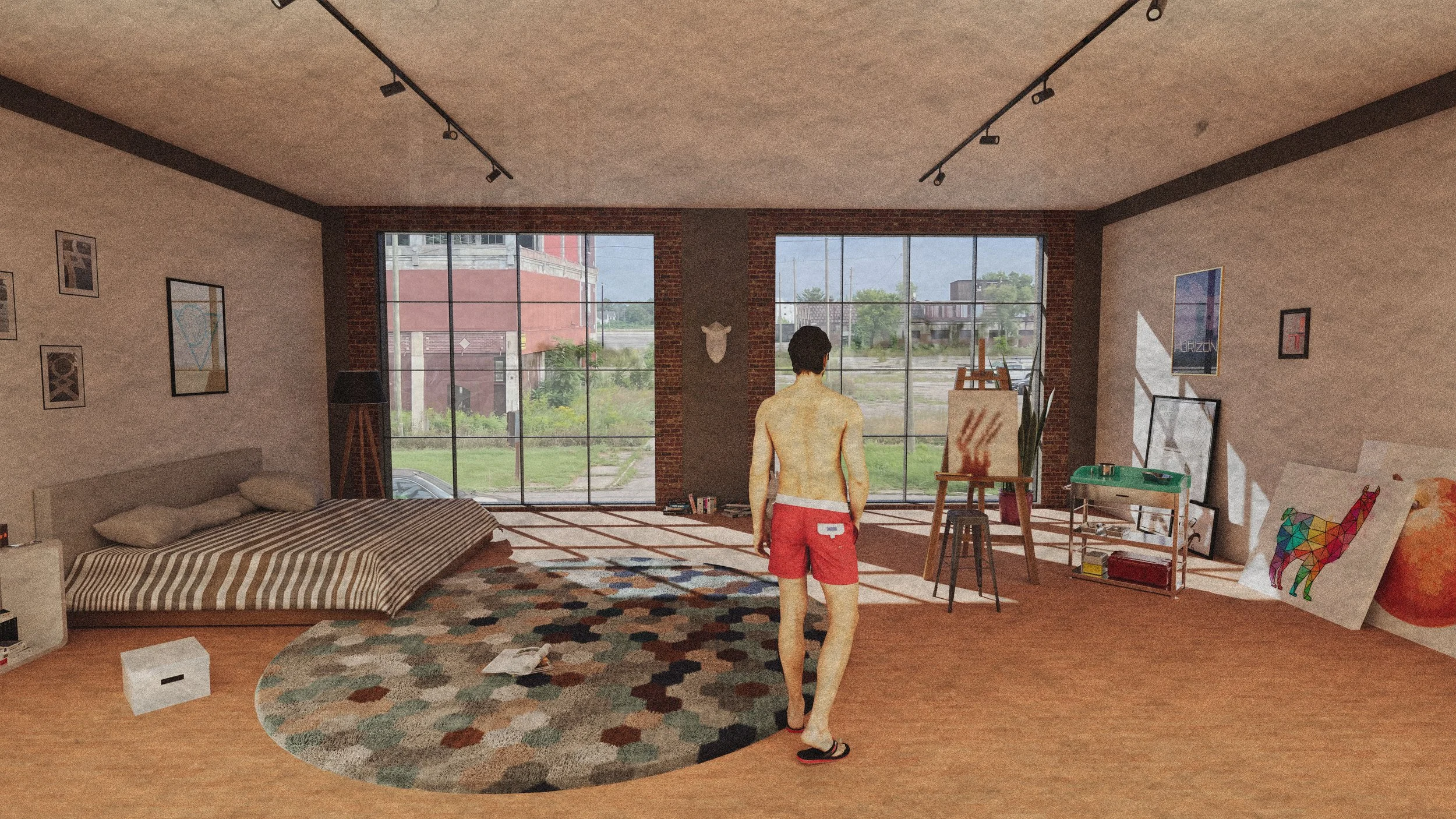
Today, only two buildings remain from the once vast Packard complex. This project reimagines the northern structure as an experimental housing model, rejecting the conventional goal of maximizing rentable square footage for profit. Instead, the proposal prioritizes affordability, adaptability, and multi-purpose spaces for the creative class. Here, noise is not treated as a nuisance but embraced as evidence of life, production, and creative exchange.
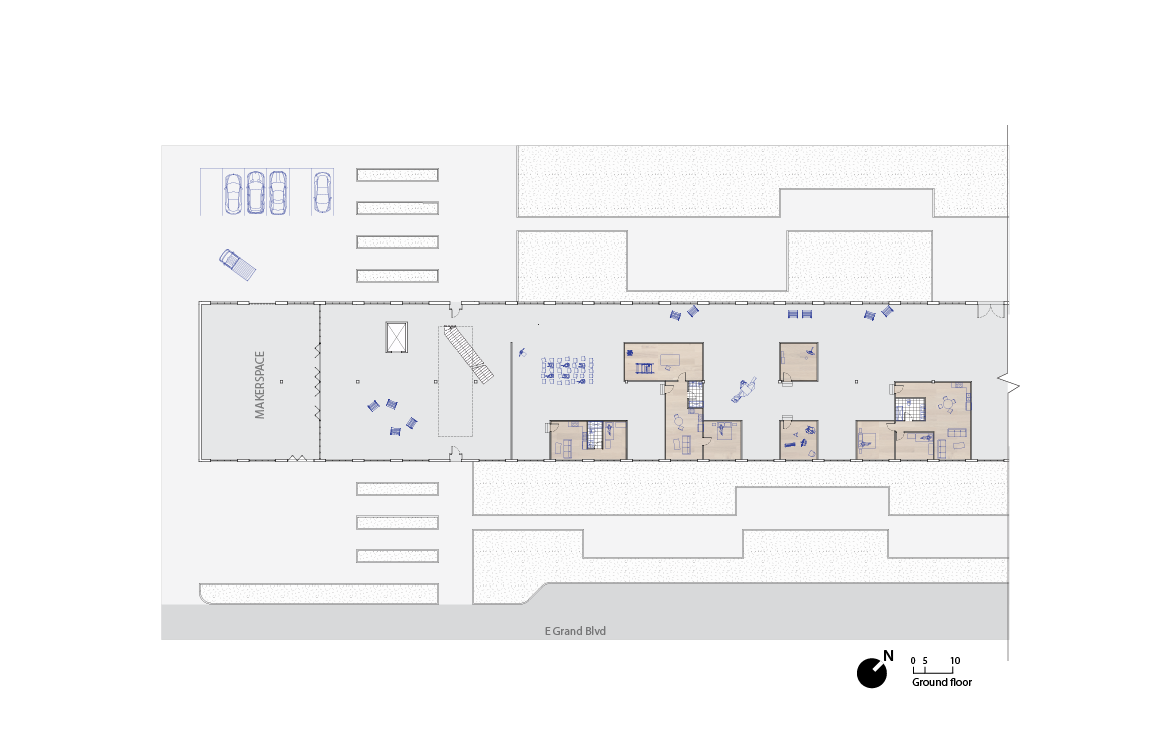
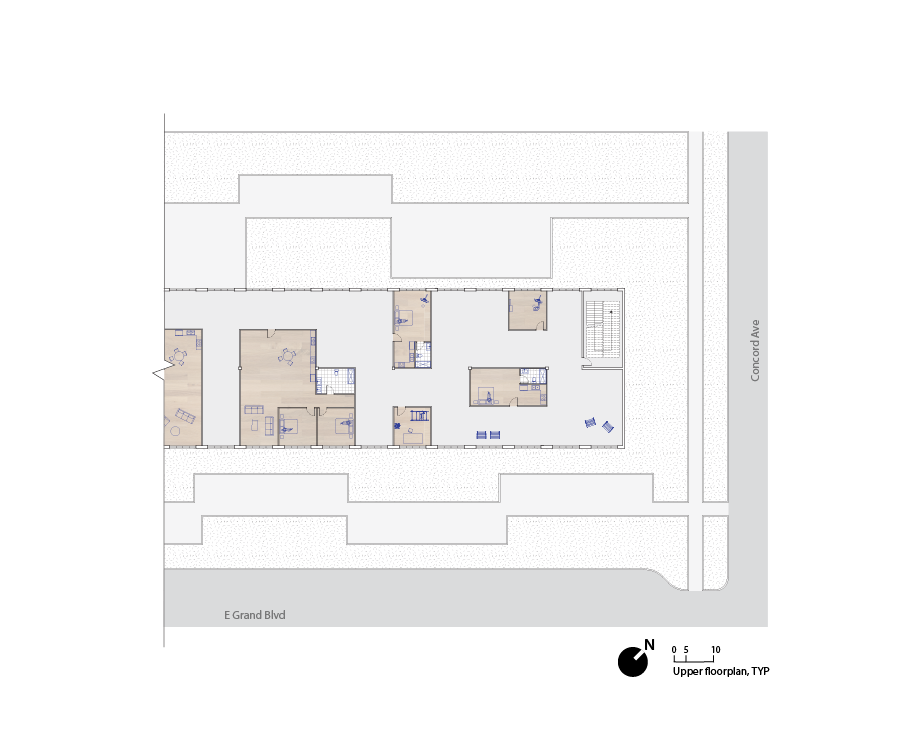
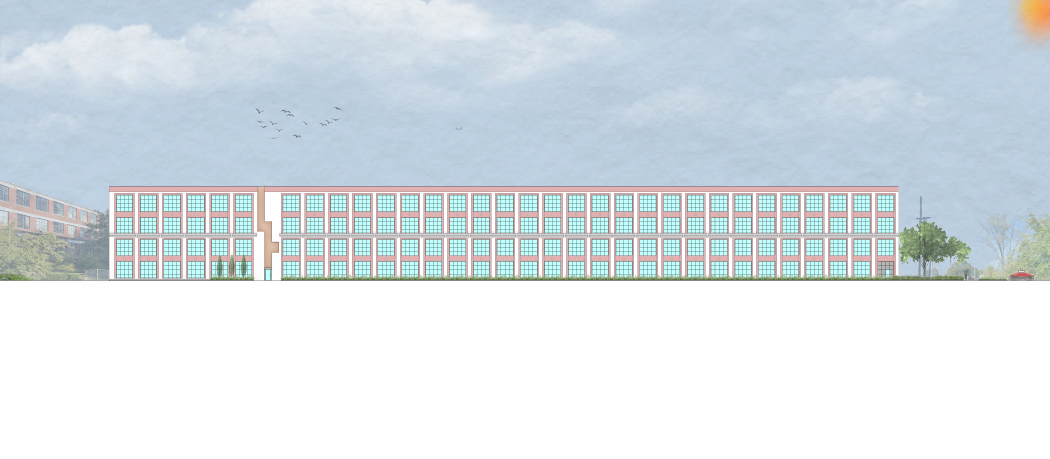
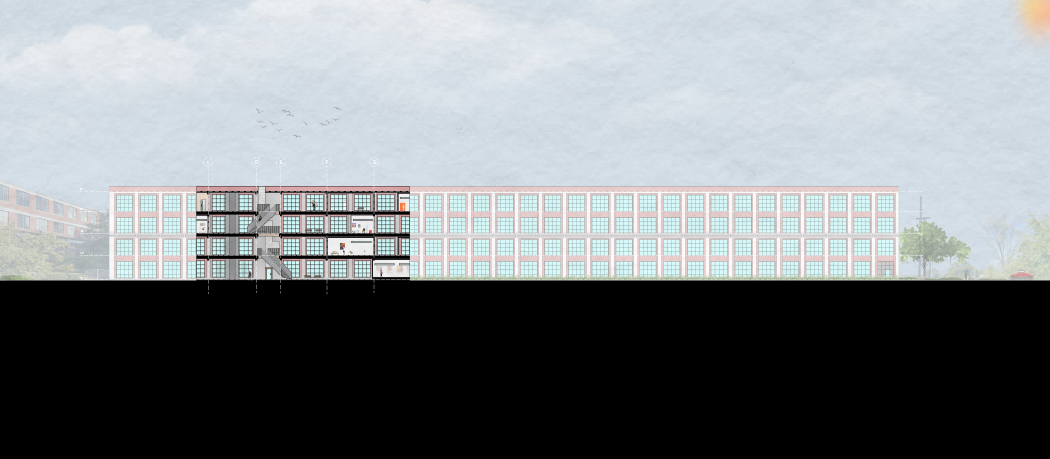
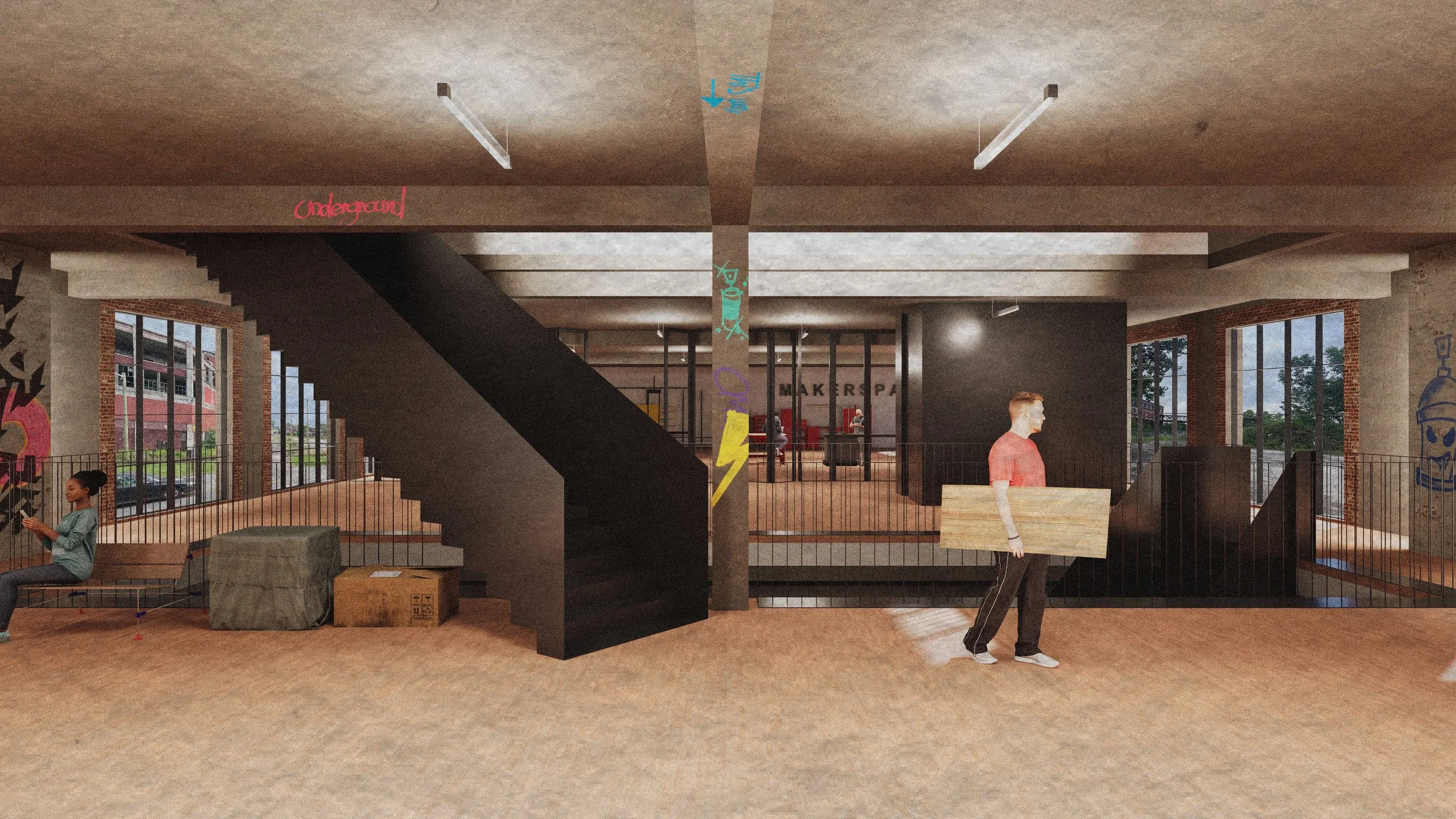
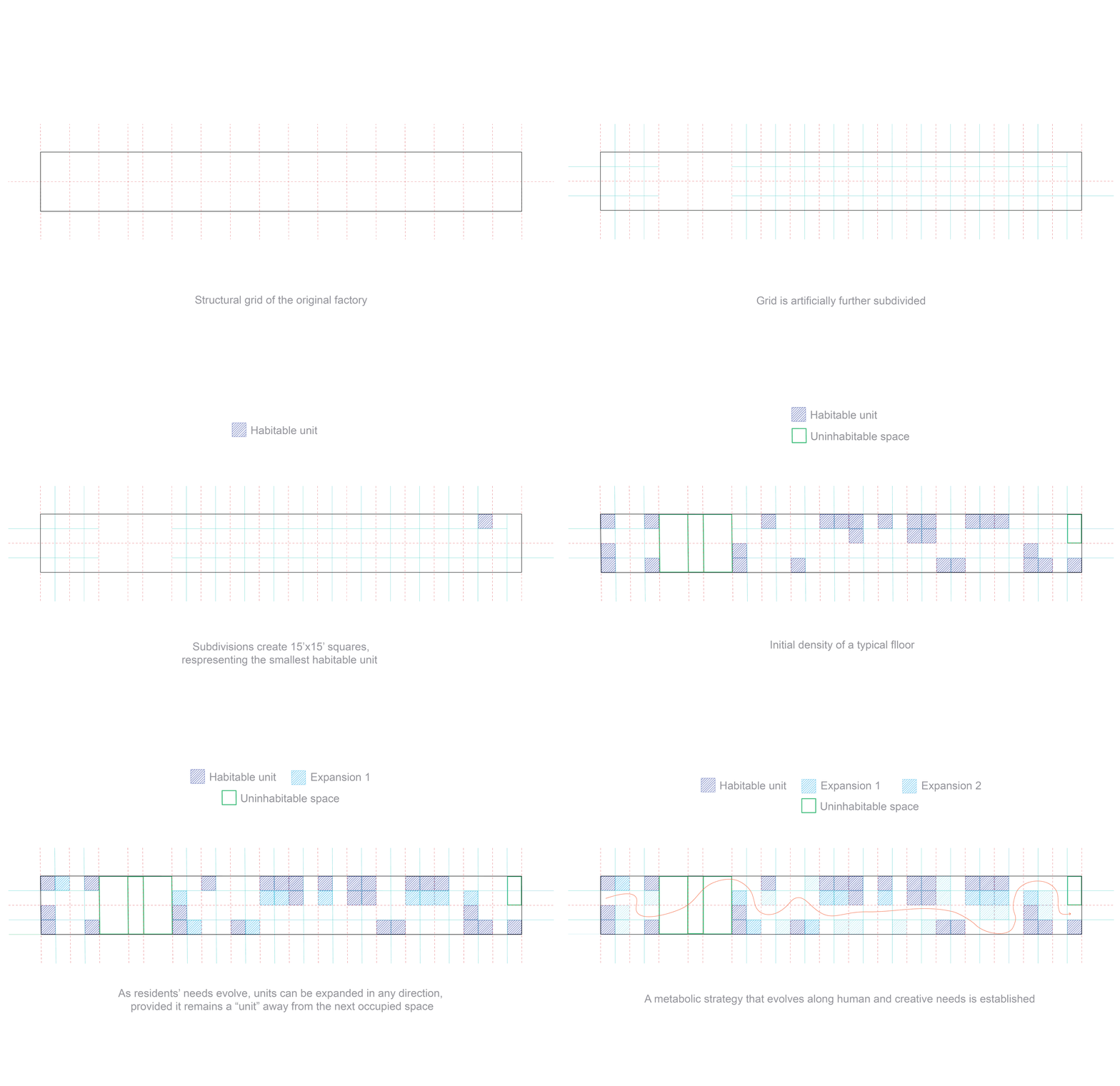
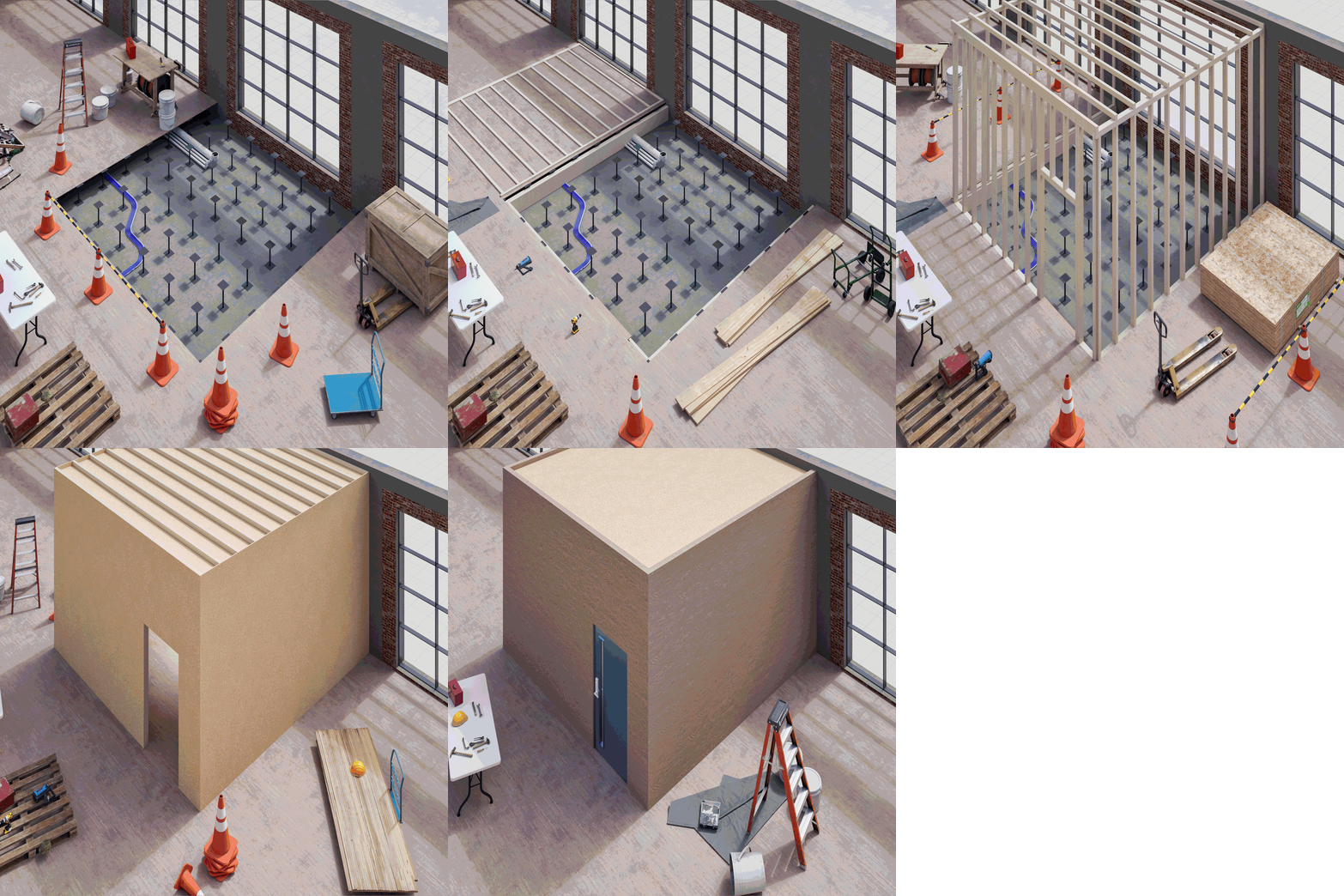
The design leverages the existing structural grid (originally optimized for clear spans required by automobile assembly) and refines it to establish a minimum living unit. Floors are subdivided into a 15 × 15-foot grid, allowing tenants to rent space by the grid and expand over time. A shared on-site makerspace supports timber-framed units, and a deliberate façade “scar” celebrates the building’s layered history and Detroit’s resilience.
Program: mixed-use residential, adaptive reuse
Size: 29500 sf
Status: speculative
Year: 2025
Location: Detroit, MI, USA