RADIEUSE
The urban heat island (UHI) effect occurs when cities experience significantly higher temperatures than their surrounding rural areas, with average daily temperatures rising 1–7°F higher. This phenomenon is driven by dense infrastructure: roads, buildings, and dark, rough surfaces, that absorb solar radiation during the day and release it as heat, compounded by a lack of vegetation. The widespread and intensified use of materials such as concrete and brick in architecture has therefore played a significant role in warming urban environments.
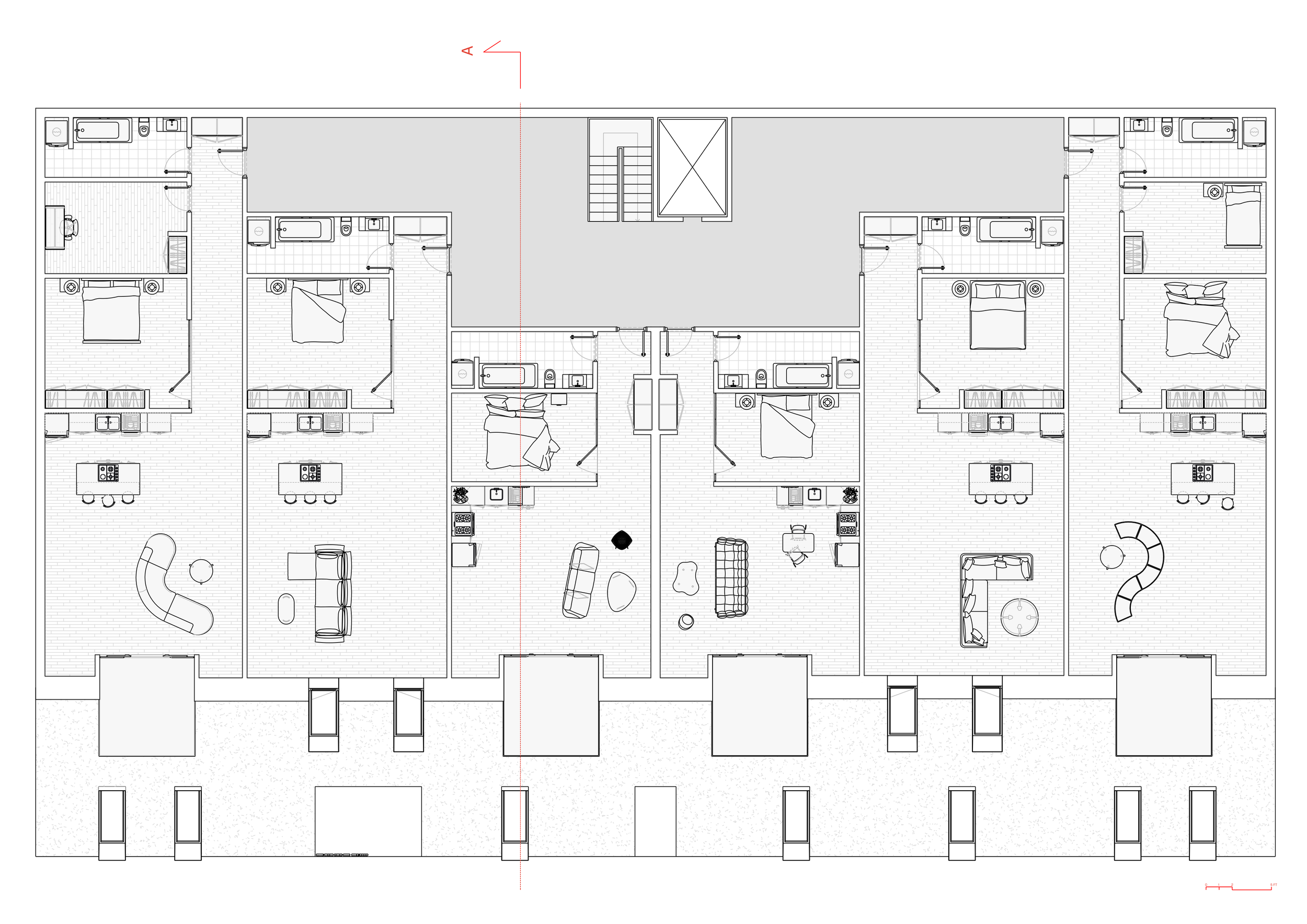
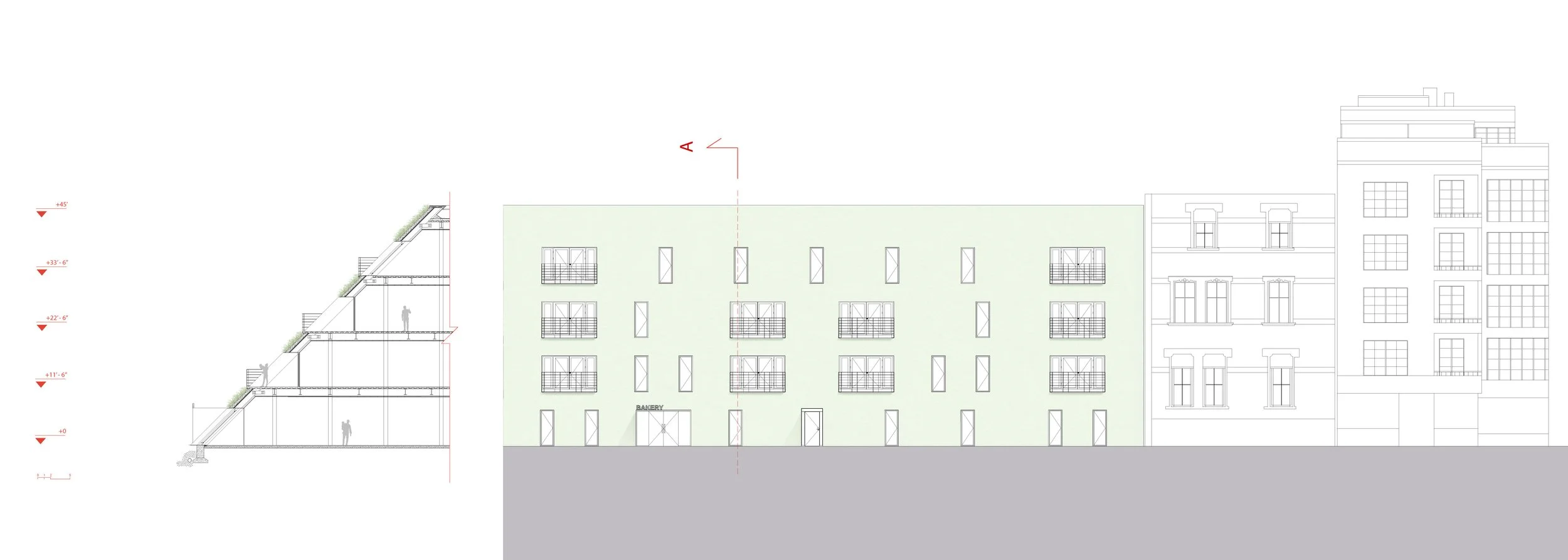
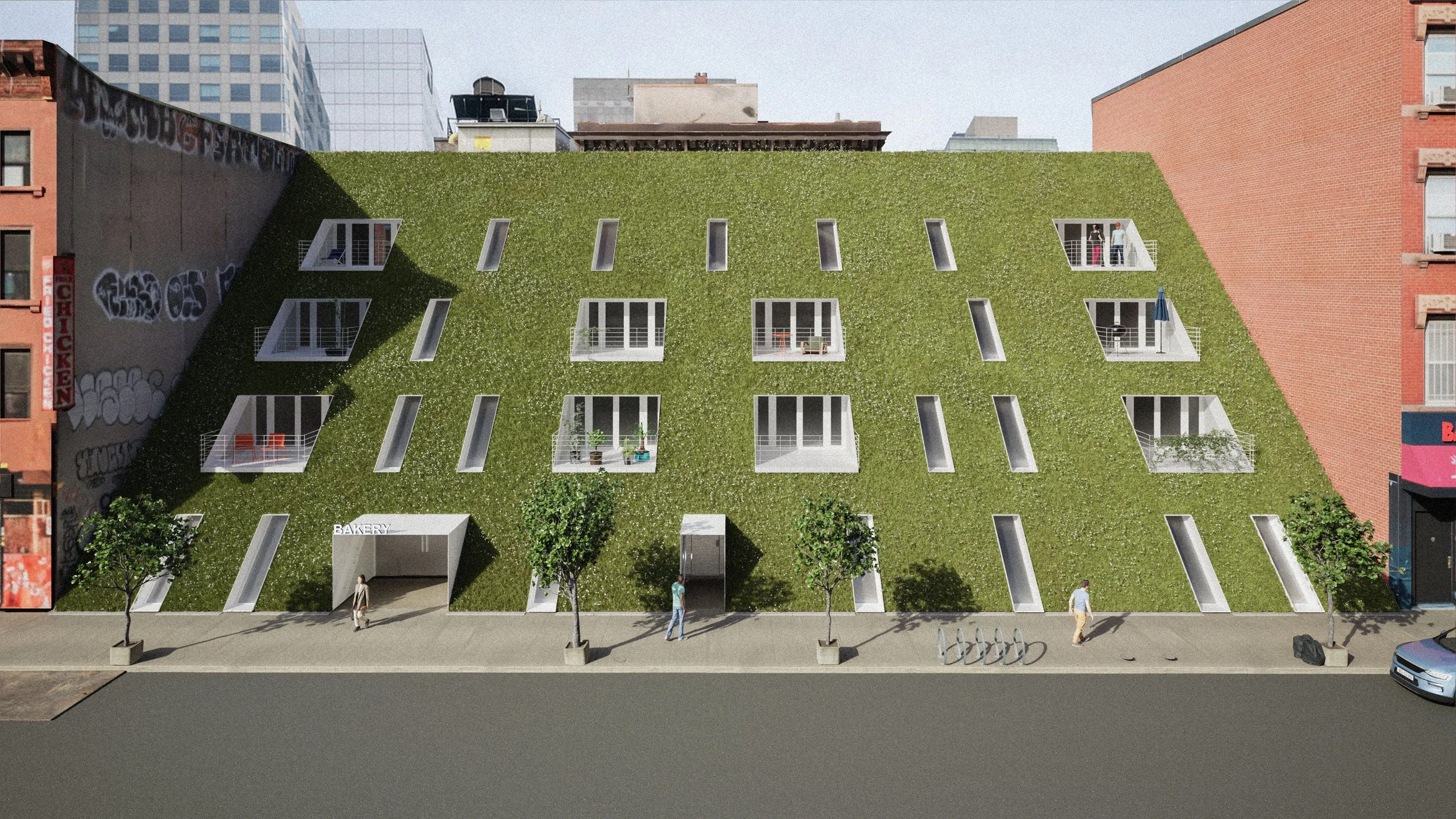
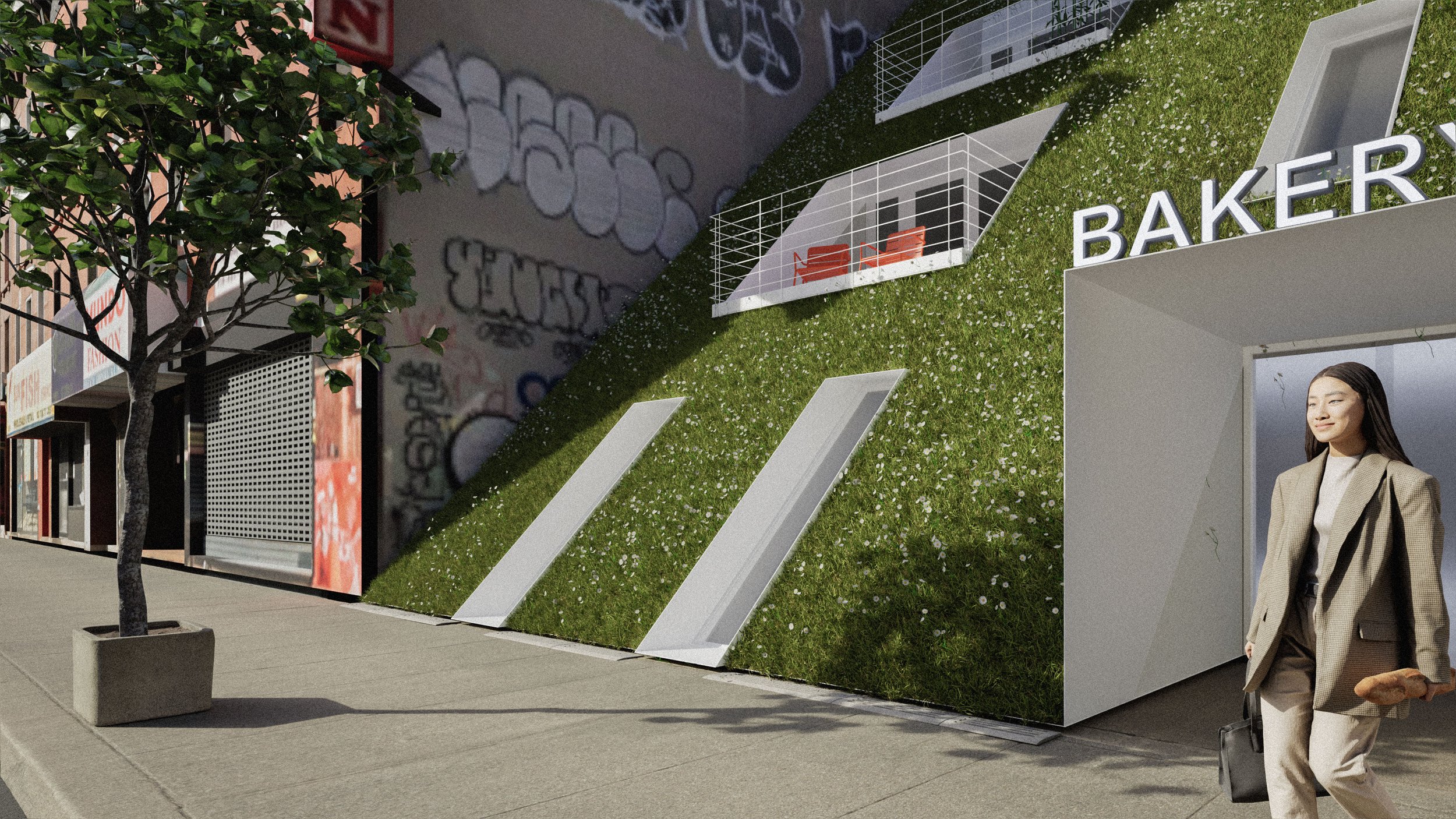
Radieuse goes back to an alternative façade typology; one that is restrained yet deeply integrated with its environment. Rather than functioning as a static, non-living surface, the project embraces living wall systems at maximum scale as an active architectural strategy. Beyond animating the façade through seasonal change and movement, green walls reduce heat gain and cooling loads, mitigate rainwater runoff, and filter airborne pollutants, resulting in a highly efficient and responsive building envelope.
This façade typology directly addresses the scarcity of green space in urban contexts, transforming architecture itself into a living organism and positioning the building as an active participant in its ecological environment.
Program: residential mixed-use
Size: 800 sf
Status: speculative
Year: 2026